

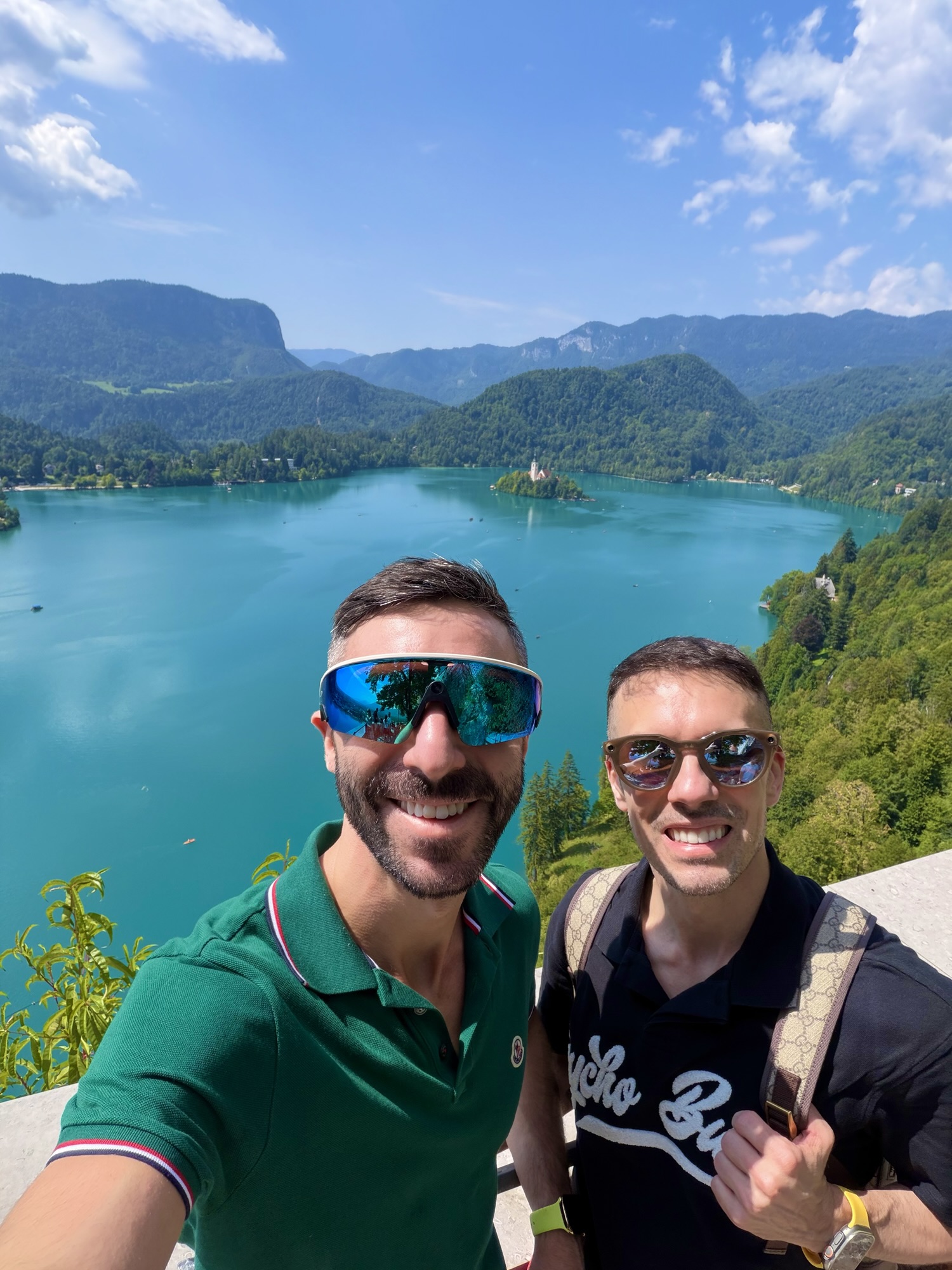
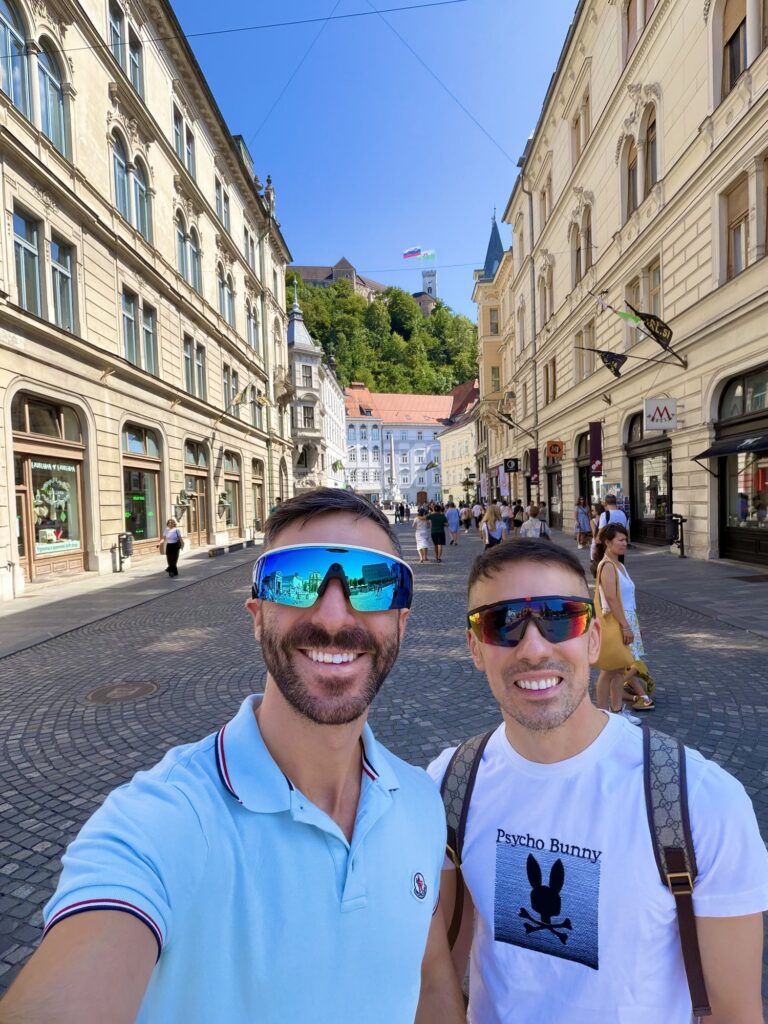
Slovenia gave us castles carved into cliffs, impossibly blue Alpine lakes and some of the calmest scenery in Europe. Luxembourg delivered underground fortifications, dramatic city views and free transportation. Amsterdam ended the journey with canal boats, world-class vegan food and a WorldPride celebration headlined by some of pop music’s biggest icons.
It was an ambitious 10-day itinerary—and occasionally a chaotic one.
There were missed time slots, wrong-way trains, narrow mountain roads, canceled rideshares, expensive tap water and one airport connection that nearly turned into an international sprinting competition. Yet those imperfect moments made the trip far more memorable.
Here is our complete Slovenia, Luxembourg and Amsterdam itinerary, including what was worth doing, what we would change and the travel mistakes you can easily avoid.
At a Glance: Our 10-Day Europe Itinerary
Days 1–3: Ljubljana, Predjama Castle, Lake Bled and Lake Bohinj
Day 4: Slovenia to Luxembourg via Zurich
Day 5: Luxembourg City
Day 6: Luxembourg to Amsterdam
Days 7–9: Amsterdam and WorldPride
Day 10: Amsterdam to New Jersey via London Heathrow
This route works particularly well for travelers who want a combination of nature, historic cities, vegan dining and nightlife without spending an entire trip in one country.
Days 1–3: Slovenia
Day 1: Ljubljana’s Bridges, Castle and Old Town
Our journey began with an overnight Lufthansa flight from Newark to Munich, followed by a connection to Ljubljana.
We had been concerned about the transfer in Munich, but it proved much easier than expected. Even after walking between terminals, taking the airport train and passing through passport control, we reached the gate without any real difficulty.
Sleeping on the overnight flight was another matter.
Cabin service began with drinks, followed by dinner roughly 30 minutes later. Between the lighting, meal carts and general cabin noise, we managed only a few hours of broken sleep.
Arriving in Ljubljana
After landing, we collected our rental car and discovered that the compact vehicle we had reserved had somehow transformed into an SUV.
Rental agencies appear to believe every traveler secretly dreams of navigating Europe in the largest available vehicle. At least ours was a hybrid, and Slovenia’s smooth, well-maintained roads made driving relatively easy.
We stayed at Franckov Hram, a self-service property that felt closer to an Airbnb than a conventional hotel. There was no formal front-desk check-in; instead, our key was waiting in a lockbox.
After showering, we headed directly into Ljubljana.
Ljubljana Central Market
We began at Ljubljana Central Market, part of the architectural legacy of celebrated Slovenian architect Jože Plečnik.
The riverside setting is attractive, and the market remains an important part of local life, but travelers expecting a sprawling European food hall may find it modest. It is worth incorporating into an Old Town walk, though it would not be our primary reason for visiting Ljubljana.
Dragon Bridge
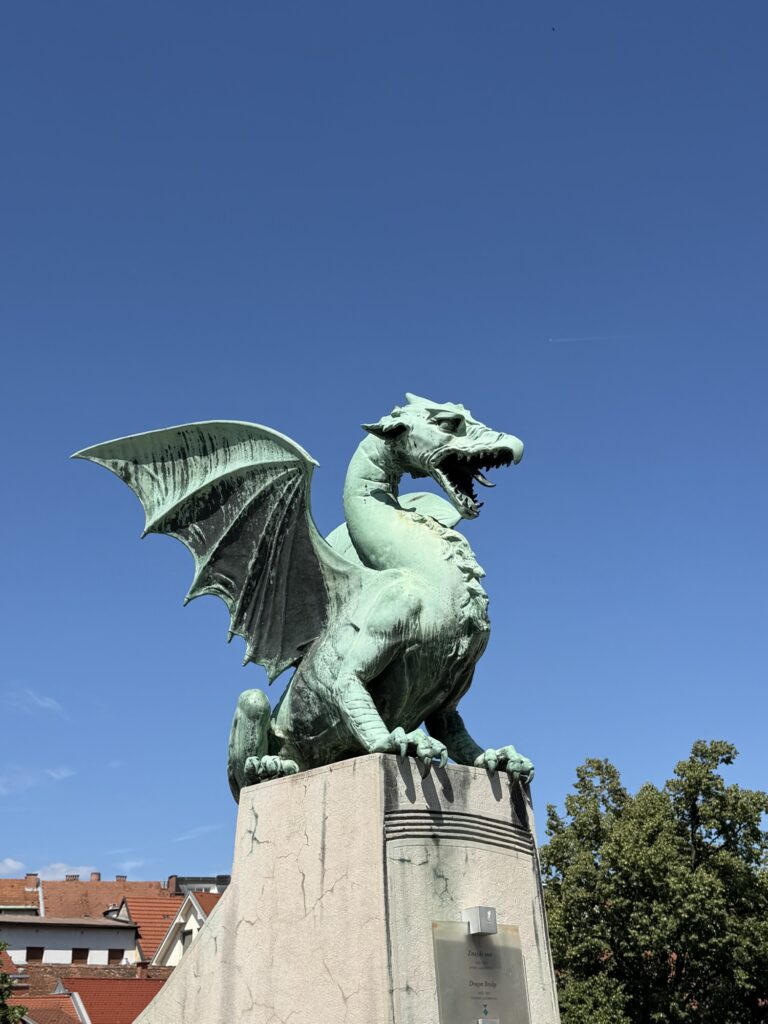
From the market, we walked to Dragon Bridge, one of Ljubljana’s most recognizable landmarks.
Completed in 1901, the bridge is guarded by four copper dragon statues. The dragon has become an unofficial emblem of the city, and local legends have given the statues considerably more personality than the average piece of civic architecture.
The bridge is quick to visit, highly photogenic and conveniently located near the market.
Triple Bridge
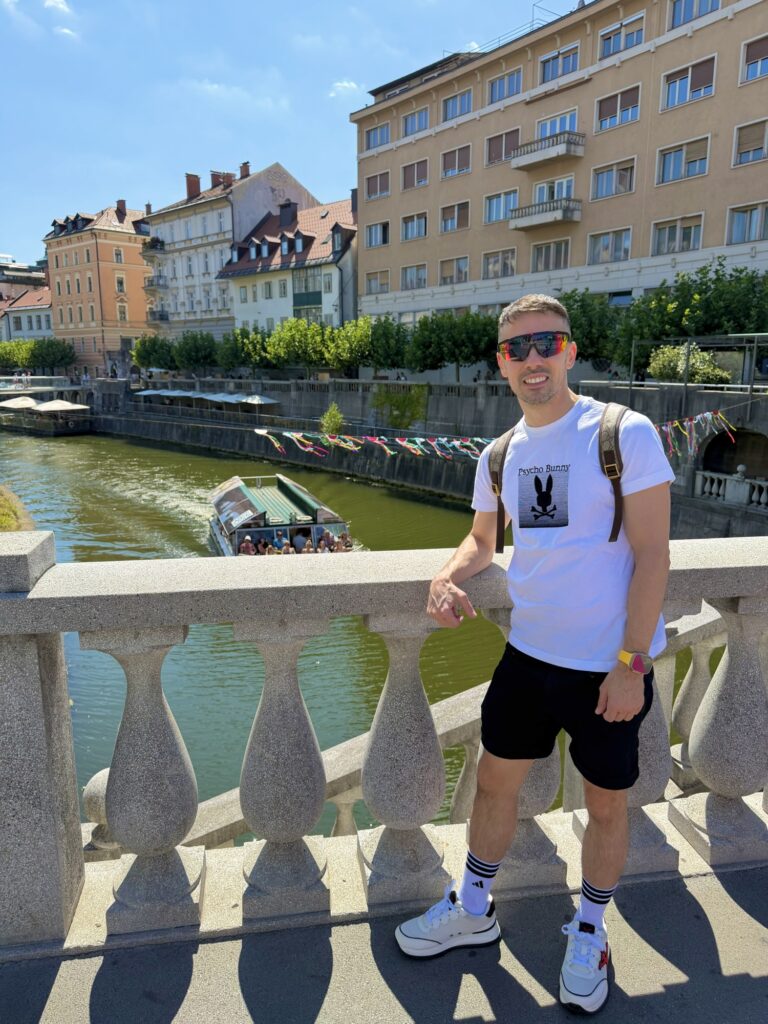
We continued along the Ljubljanica River to Triple Bridge.
Plečnik transformed the original stone bridge by adding pedestrian crossings on either side, creating three parallel pathways connecting the medieval Old Town with the newer city.
Today, the bridges form one of Ljubljana’s liveliest gathering spaces. Street performers, cafés, river views and the surrounding architecture make this the visual heart of the city.
Vegan Dinner at Veganika
Dinner was at Veganika, where we ordered soba noodles and an artichoke dish with vegan cheese sauce.
Both were excellent. The food was inventive without feeling overly complicated, making Veganika an easy recommendation for plant-based travelers.
Ljubljana Castle
After dinner, we boarded the funicular to Ljubljana Castle.
The ride takes only about a minute, but it saves a steep uphill walk and delivers visitors directly to the castle complex. Ljubljana Castle and its funicular operate throughout the year, although hours vary seasonally. (Ljubljanski Grad)
The castle has evolved over centuries from a medieval defensive structure into a major cultural attraction. Parts of the complex can be explored freely, while exhibitions, towers and special experiences require admission.
The real reward is the view.
From Castle Hill, Ljubljana’s terracotta rooftops, church towers and river unfold below, with mountains visible beyond the city on clear days. Visiting close to sunset adds atmosphere and softer light for photographs.
We finished the evening with a grocery run at SPAR and returned to the hotel completely exhausted.
Ljubljana Tips
Book accommodation near the center when possible; Ljubljana is compact and best explored on foot.
Pair Central Market, Dragon Bridge and Triple Bridge into one easy walking route.
Take the funicular up to the castle and walk down through the Old Town when energy and weather permit.
Schedule a lighter first day after an overnight flight. Ljubljana is forgiving because its central attractions are close together.
Day 2: Predjama Castle and a Failed National-Park Detour
Jet lag won the next morning.
We slept nearly 13 hours, woke around 10:00 a.m. and still felt tired. After rushing to get ready, we drove approximately one hour toward Predjama Castle.
The highway portion was straightforward. The final stretch involved narrower, winding roads, but the scenery improved as we moved deeper into the countryside.
Predjama Castle
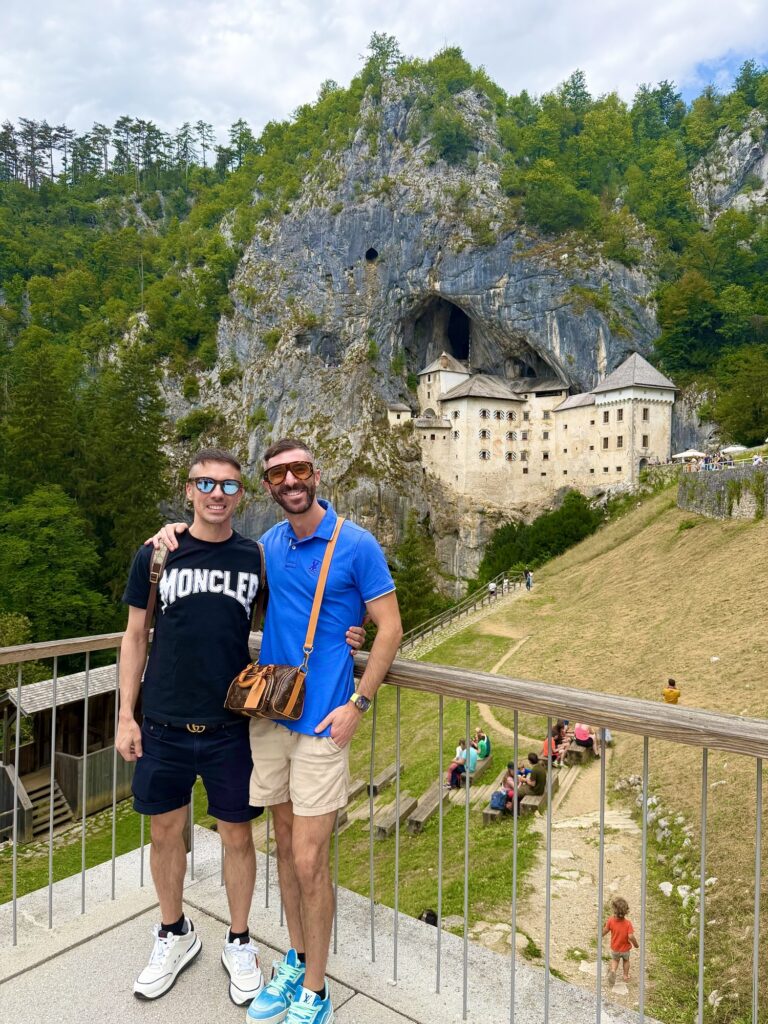
Few European castles have a more dramatic setting than Predjama.
The fortress is built directly into the mouth of a cave beneath a towering rock face. It has stood there in some form for more than 800 years and is often promoted as the world’s largest cave castle. (Postojna Cave Park)
Its most famous resident was Erazem of Predjama, a 15th-century knight surrounded by stories of rebellion, siege warfare and secret passages.
Inside, visitors move through stone chambers, defensive corridors, living quarters, an armory and spaces where the natural cave becomes part of the architecture. An official self-guided app is included with admission, while a separate audio guide is available for an additional charge. (Postojna Cave Park)
The contrast between the rough rock and built structure makes Predjama far more interesting than a standard furnished palace. It feels defensive, severe and almost cinematic.
It was also an ideal place to test a 360-degree camera. The combination of cliff, cave and castle creates perspectives that a conventional photograph struggles to capture.
Should You Combine Predjama Castle With a Cave?
Most visitors combine the castle with nearby Postojna Cave. Škocjan Caves is another major option elsewhere in the region.
We skipped both because we had recently visited Carlsbad Caverns in New Mexico and wanted a different type of experience. In retrospect, travelers who have not recently toured a major cave system should strongly consider combining Predjama with Postojna.
The castle is open throughout the year, while the cave beneath Predjama operates seasonally because it serves as a bat habitat. (Postojna Cave Park)
Rakov Škocjan Regional Park
Instead of visiting a cave, we drove to Rakov Škocjan Regional Park, a karst landscape of forest trails, natural bridges, caves and sinkholes.
This was where our planning failed.
We arrived expecting the major formations to be close to the parking area. They were not. Properly exploring the park requires more time, navigation and hiking than we had available after our late start.
We walked briefly, reassessed and left.
Rakov Škocjan may be rewarding for hikers, but it is not an efficient spontaneous stop unless you know your intended trail, parking point and walking distance in advance.
Vegan Indian Dinner in Ljubljana
Back in Ljubljana, we chose Indian food over vegan fast food and were glad we did.
At Indijska Restavracija Flame, we ordered tofu vegetable curry, chana masala with tofu and jasmine rice. The meal was flavorful, comforting and generously seasoned—the ideal ending to a day of driving and castle exploration.
Predjama Day-Trip Tips
Leave Ljubljana early, particularly when combining Predjama Castle with Postojna Cave.
Download the castle’s official guide before arriving in case reception is weak.
Wear shoes with grip; the interior includes uneven stone, steps and damp areas.
Do not treat Rakov Škocjan as a quick roadside attraction. Select a route before driving there.
Consider adding the coastal town of Piran instead when you prefer architecture and sea views over hiking.
Day 3: Lake Bled and Lake Bohinj
This was our most scenic day in Slovenia.
We woke at 6:00 a.m., completed a quick workout, had breakfast and drove toward Vintgar Gorge.
Our Vintgar Gorge Mistake
We arrived without a reserved entry time and discovered that the available slots did not work for our schedule.
Vintgar now encourages visitors to purchase its all-in-one pass online and reserve an entry time in advance. The official visitor information also notes that the full experience can take around three hours and involves designated parking and shuttle arrangements. (Vintgar Gorge)
Rather than wait, we continued to Lake Bled.
Do not repeat our mistake: reserve Vintgar before arriving, especially during summer weekends.
Lake Bled
We parked at Central Parking, approximately a 15-minute walk from the lake.
The distance was manageable and avoided the stress of searching for a closer space in one of Slovenia’s busiest destinations.
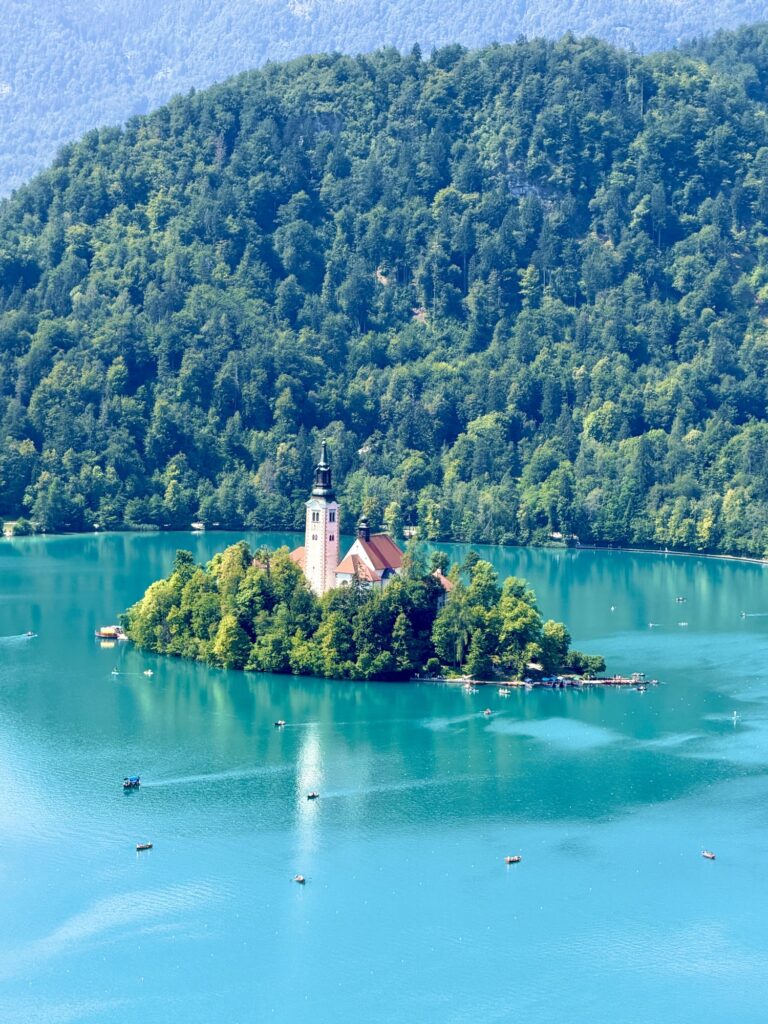
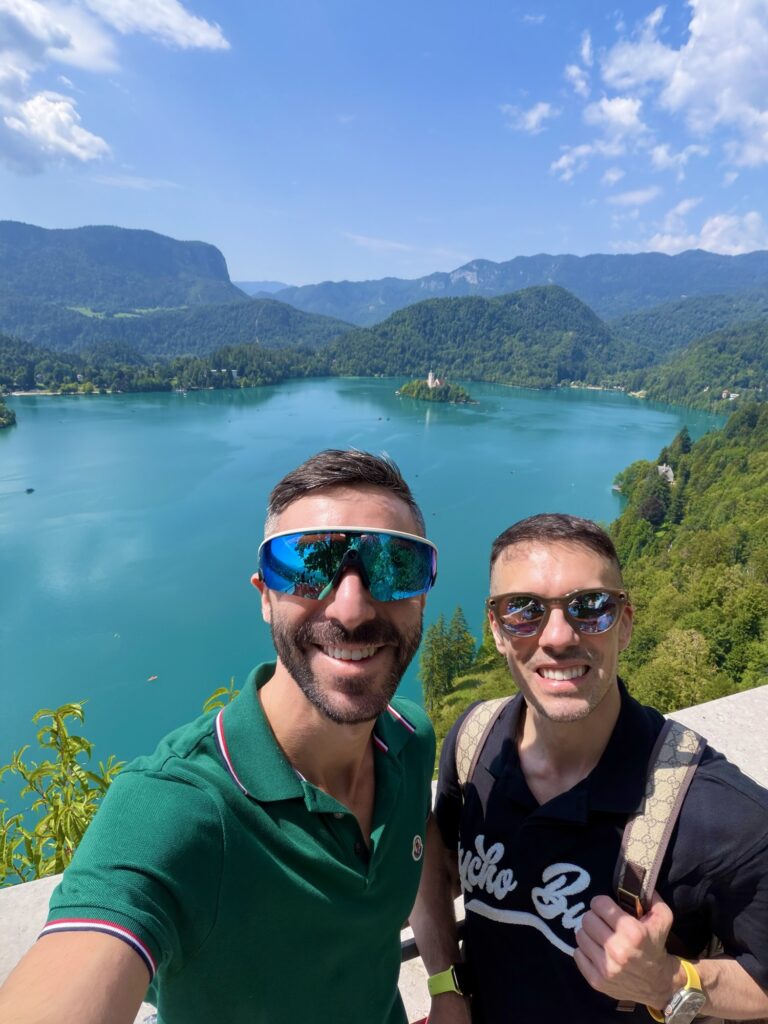
Lake Bled is every bit as photogenic as it appears online: calm blue-green water, forested hills, a tiny island church and a castle balanced high above the shoreline.
Taking a Pletna Boat to Bled Island
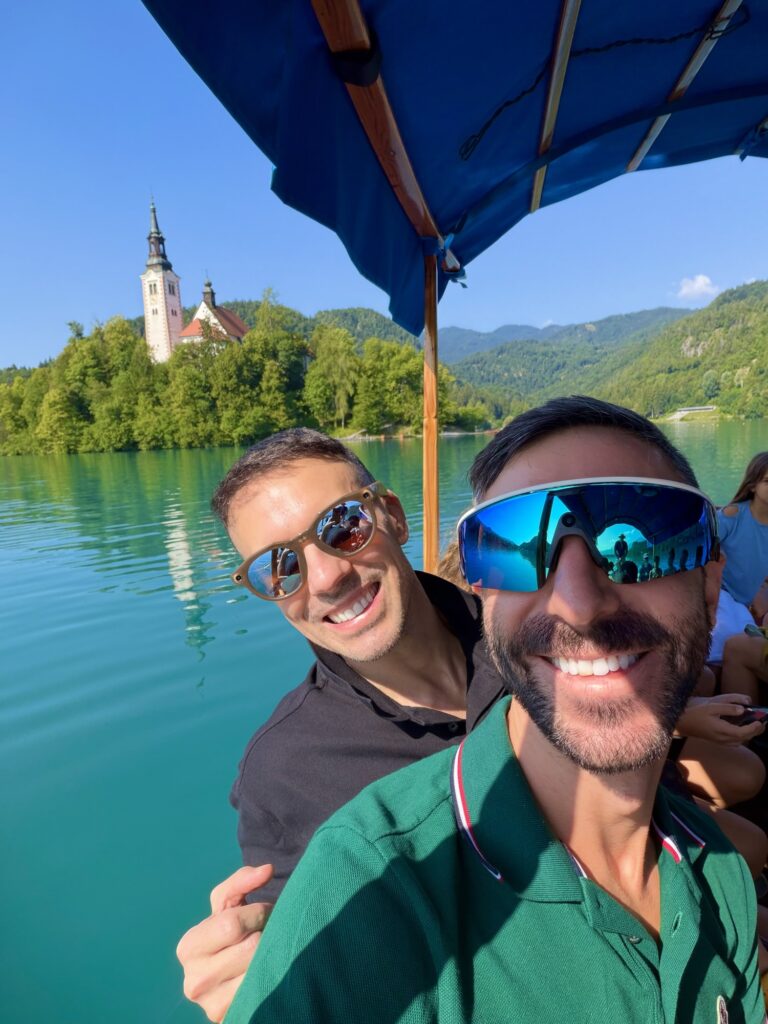
We decided to take a traditional pletna boat to Bled Island.
These flat-bottomed wooden vessels are specific to Bled and are propelled by a standing oarsman using two oars. (Bled)
Our ride cost €20 per person and required cash, so we first had to find an ATM. Prices and payment policies can change, so carry euros rather than assuming cards will be accepted.
The total excursion lasted approximately one hour and 40 minutes, including our time on the island.
Church of the Assumption
Bled Island is home to the Church of the Assumption.
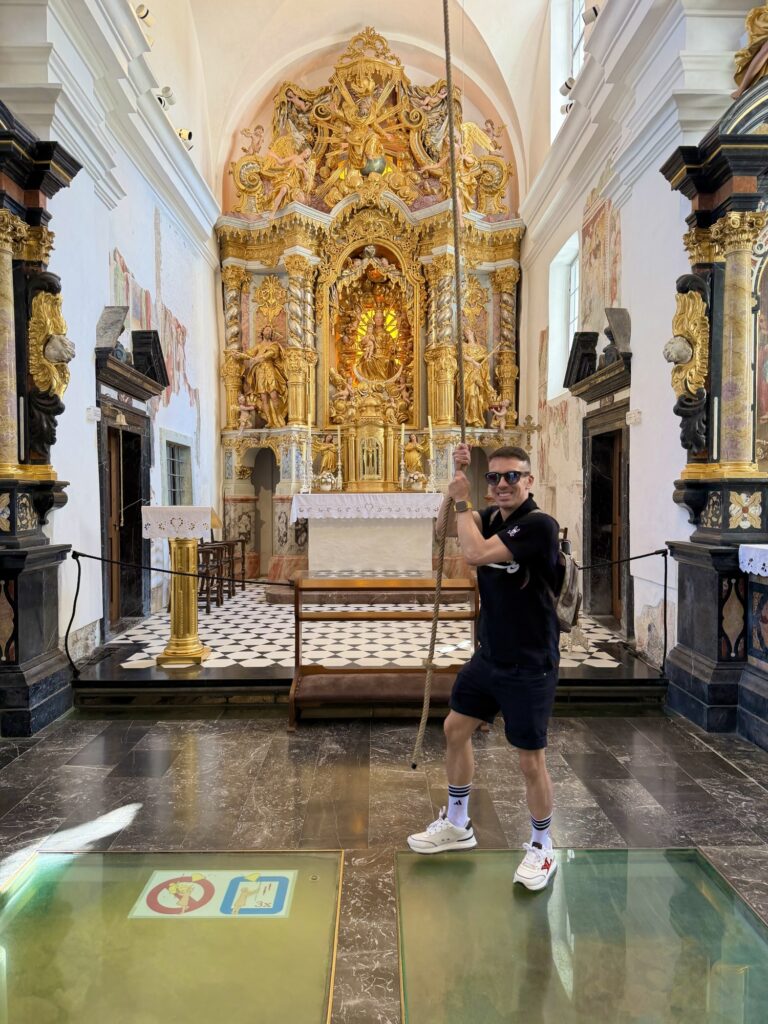
Inside is the famous wishing bell, which visitors traditionally ring while making a wish. Whether the legend works is debatable; the experience is still fun.
We explored the church, walked around the compact island, bought coffee and admired the mountains surrounding the lake.
The island is peaceful but small. Most visitors will not need more than the time provided by a standard pletna excursion.
Bled Castle
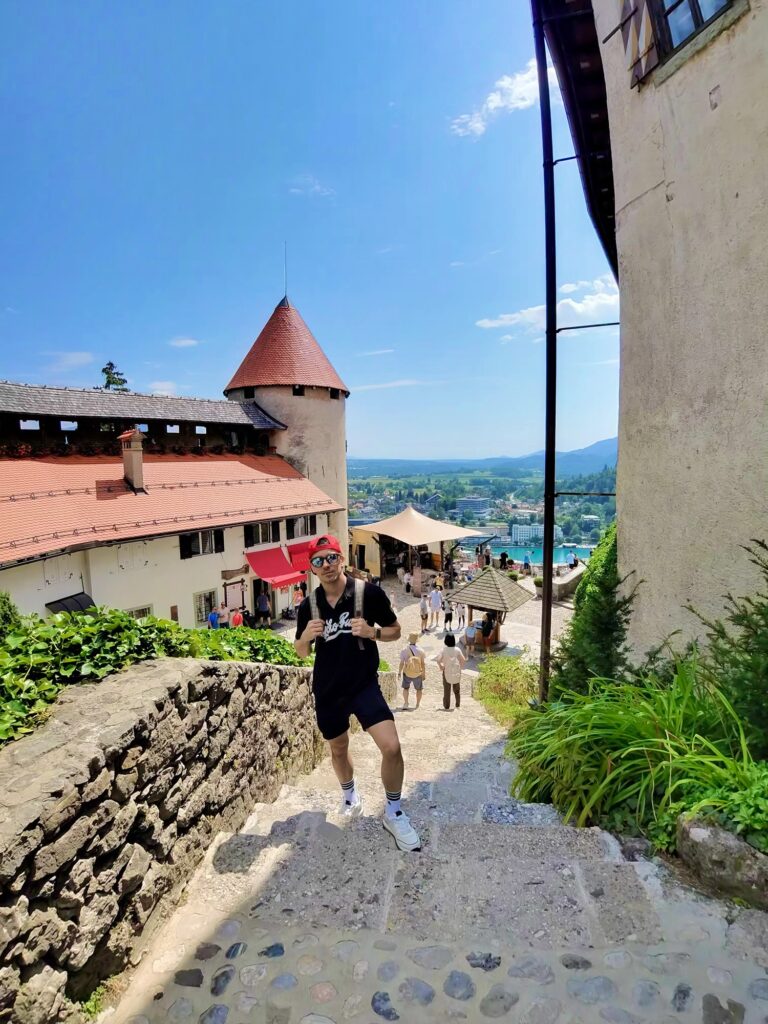
After returning to shore, we drove to Bled Castle.
Perched on a cliff above the lake, the castle offers the area’s most complete panoramic view. From the terraces, the island church appears perfectly positioned against the water and mountains.
The interior includes exhibitions and historical displays, but the scenery is the main event.
We also found one of our favorite souvenirs there: a Lake Bled snow globe.
Lake Bohinj
From Bled, we continued into Triglav National Park toward Lake Bohinj.
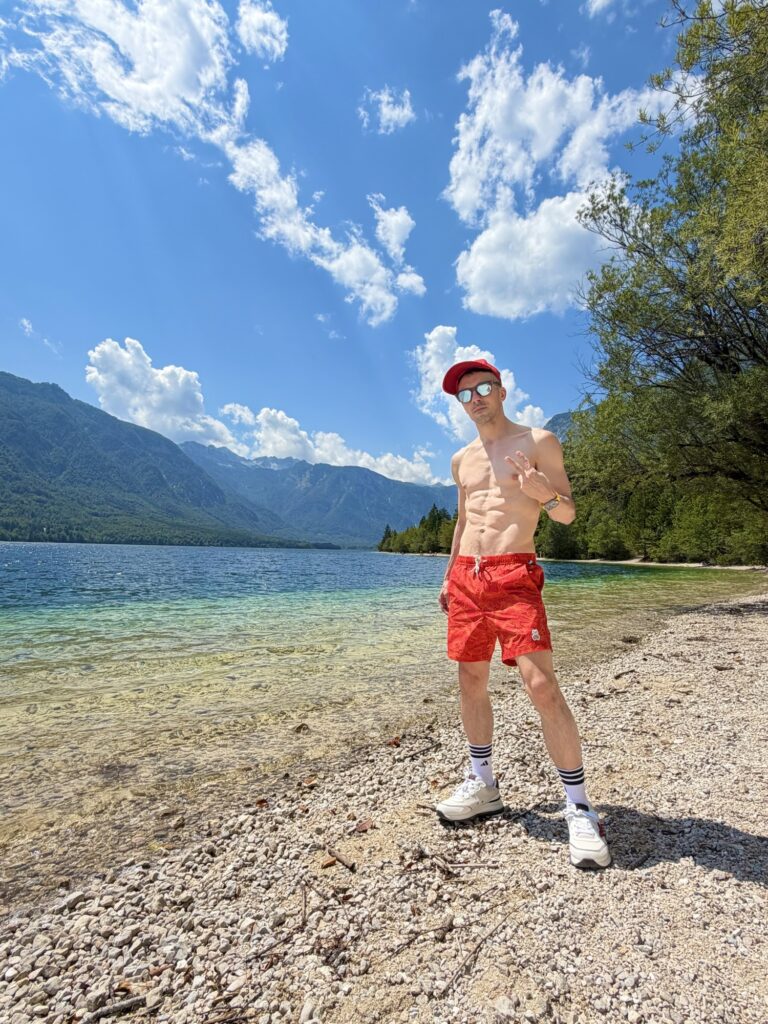
Where Bled is polished and iconic, Bohinj feels wilder and less developed. The water is clear, the forest reaches close to shore and the surrounding mountains dominate the landscape.
Our navigation led us along narrow, winding roads and eventually to a parking area above the lake. At first, the directions appeared to send us on a much longer walk. Another couple pointed out a gate and path leading down toward the shoreline.
We found a partially shaded spot, took photographs and attempted to swim.
The water temperature was comfortable, but the rocky shoreline was painful underfoot. Water shoes would have improved the experience considerably.
Our peaceful afternoon ended when an extremely persistent bee decided our section of the lake belonged to it. After several failed relocation attempts, we accepted defeat and left.
Dinner at Barbarella
Back in Ljubljana, our intended restaurant had stopped serving food before its posted closing time.
This is an important European travel lesson: a restaurant may remain open after its kitchen closes.
We walked instead to Barbarella, a vegan café and prepared-food concept, where we ordered a protein salad, tofu quiche and smoothies. It was a healthy, convenient alternative after a long day outdoors.
Lake Bled and Bohinj Tips
Reserve Vintgar Gorge before the day of your visit.
Carry cash for traditional boat rides and small vendors.
Allow at least half a day for Lake Bled if visiting the island and castle.
Bring water shoes for Lake Bohinj.
Stay overnight near Bled or Bohinj when hiking and swimming are priorities. Doing both lakes from Ljubljana is possible, but it creates a long day.
Use marked parking areas rather than following improvised map directions toward isolated access points.
Try Bled cream cake when dietary preferences allow; it is the region’s signature dessert.
Days 4–5: Luxembourg
Day 4: Slovenia to Luxembourg
We began the morning with breakfast and a 30-minute workout before returning our rental SUV to Alamo at Ljubljana Airport.
Our route took us first to Zurich and then onward to Luxembourg.
The initial flight was delayed, producing the familiar anxiety that accompanies any connection booked with limited margin. The aircraft also circled before landing, but we arrived with enough time to continue.
Vegan Food at Zurich Airport
During the layover, we found Yooji’s, a Japanese-inspired restaurant with clearly identified plant-based options.
We ordered a spicy tofu bowl and a seitan bowl topped with pomegranate. Airport meals are often expensive, disappointing or both, so finding something fresh and filling was a welcome surprise.
While eating, we saw reports that Madonna might appear during Amsterdam WorldPride. That immediately made the final part of the trip even more exciting—and potentially more complicated, since major surprise performances can completely reshape an already crowded festival schedule.
Our flight from Zurich to Luxembourg lasted only about 35 minutes.
Arriving in Luxembourg
Luxembourg offers free public transportation throughout the country, including buses, trams and most domestic trains. After a long travel day, however, we chose convenience and took a rideshare directly to the Meliá Luxembourg.
The hotel was modern, comfortable and significantly more polished than we expected.
Our arrival included one strange surprise: when we opened our assigned room, two women were already standing inside. They left awkwardly, and the situation was never fully explained. It appeared to be a room-assignment or housekeeping error, but it was an unsettling way to begin the stay.
After dropping off our bags, we hurried to a nearby Proxy Delhaize before it closed at 8:00 p.m. We stocked up on breakfast items, snacks and simple meals for the next day.
That grocery run saved both time and money during our packed one-day Luxembourg itinerary.
Luxembourg Arrival Tips
Use the free public transportation when you have the energy and time. It is one of Luxembourg’s greatest travel advantages.
Stay near a tram or train stop to simplify airport transfers and sightseeing.
Check your hotel room immediately after entering, particularly when electronic key errors or duplicate room assignments are possible.
Buy breakfast foods and snacks at a supermarket. Luxembourg restaurants can be expensive.
Day 5: How to See Luxembourg City in One Day
Luxembourg City is ideal for a compact one-day itinerary.
Its most important attractions are close enough to combine on foot, although the steep elevation changes between the upper city and the Grund can make the day more physically demanding than expected.
Our morning began with Luxembourg’s free train system—and an immediate mistake.
We initially traveled in the wrong direction, corrected ourselves and then encountered construction that required us to leave the train, walk around the interrupted section and board again.
Eventually, we reached the center.
Notre-Dame Cathedral
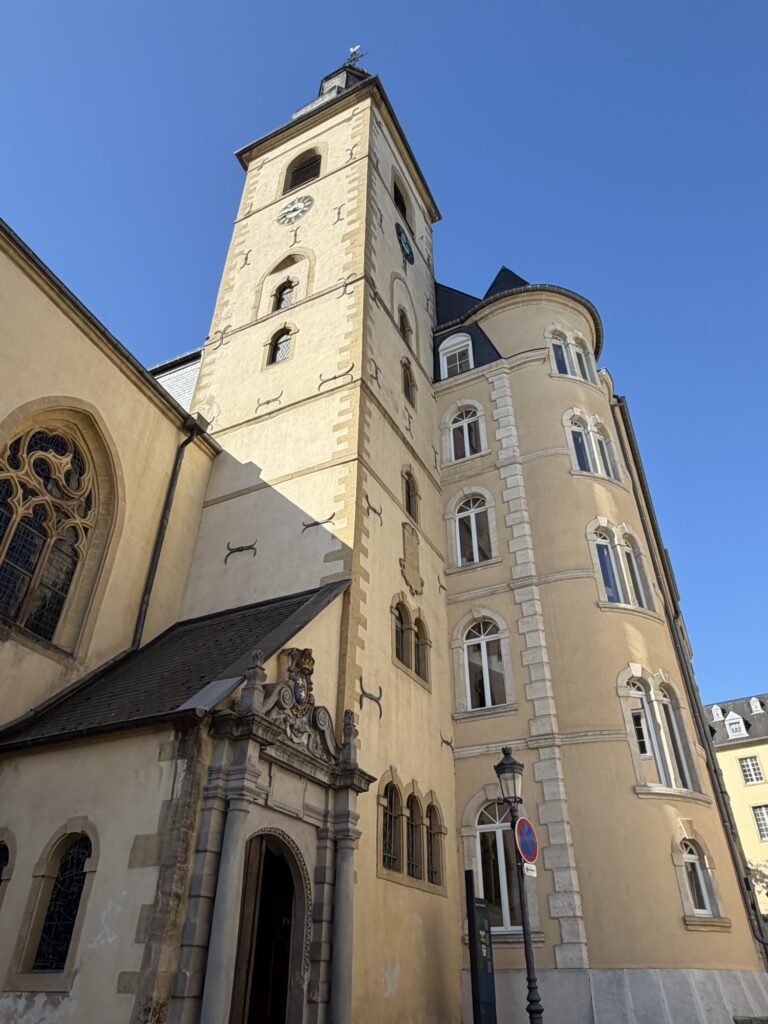
Our first stop was Notre-Dame Cathedral, the country’s principal Roman Catholic cathedral.
Built during the 17th century as a Jesuit church, it combines late Gothic design with Renaissance and Baroque details. The interior is defined by high vaulted ceilings, ornate stonework and vivid stained-glass windows.
It is centrally located, free to enter and requires relatively little time, making it an excellent first stop.
Visitors should dress respectfully and avoid touring during religious services.
Chemin de la Corniche
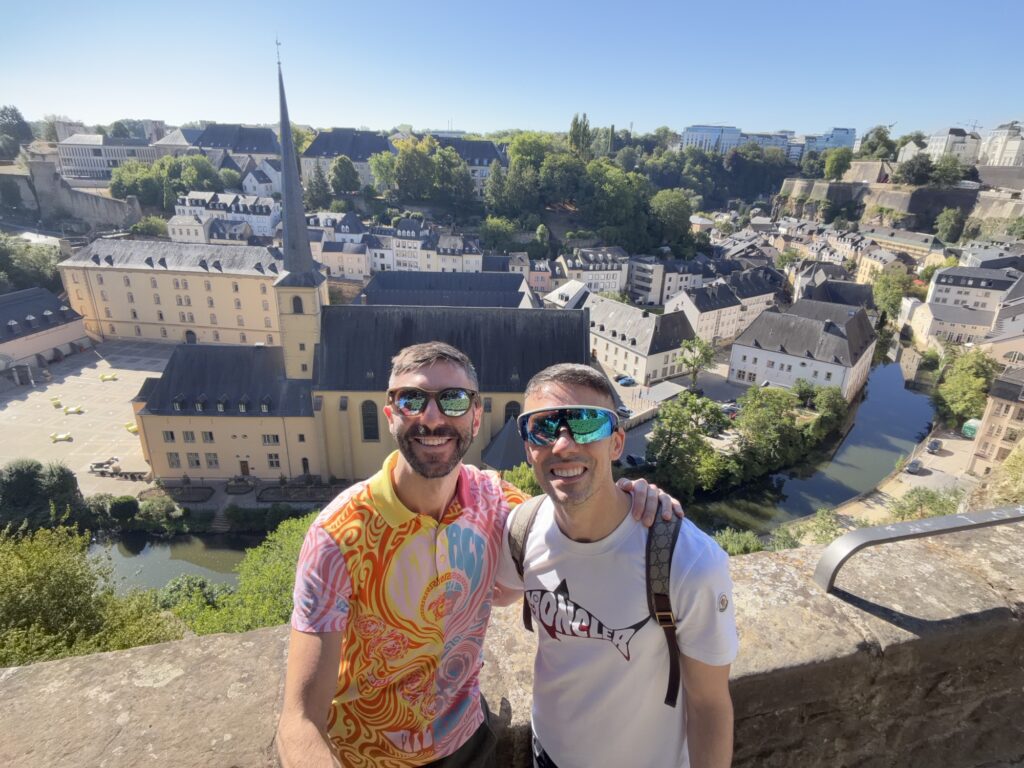
From the cathedral, we walked to the Chemin de la Corniche, famously described as “Europe’s most beautiful balcony.”
The promenade follows Luxembourg’s old fortress walls and overlooks the Alzette River, stone bridges, church towers and the historic Grund district below.
This was one of the visual highlights of Luxembourg City.
The route is relatively short, but it offers numerous viewpoints. Visit early or late in the day for softer light and fewer people.
Grand Ducal Palace
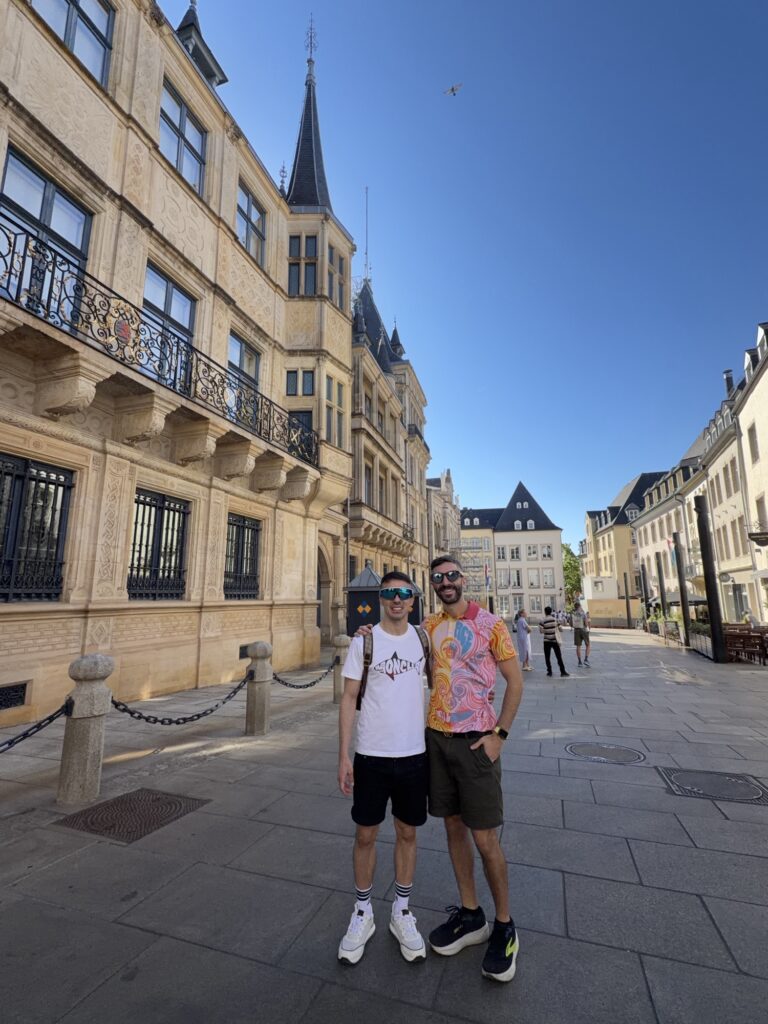
We continued to the Grand Ducal Palace, the official city residence of Luxembourg’s head of state.
The palace’s Flemish Renaissance façade is worth seeing even without entering. Interior tours are typically seasonal and can sell out, so reservations are essential when touring the rooms is important to you.
We had not secured tickets, but the exterior was enough for our itinerary.
Place Guillaume II
Nearby Place Guillaume II is one of Luxembourg City’s main civic squares.
Surrounded by government buildings, cafés and pedestrian streets, it is a useful orientation point rather than a destination requiring a long visit.
It also places visitors close to the palace, shopping streets and several major landmarks.
Bock Casemates
The Bock Casemates were one of the city’s most historically significant stops.
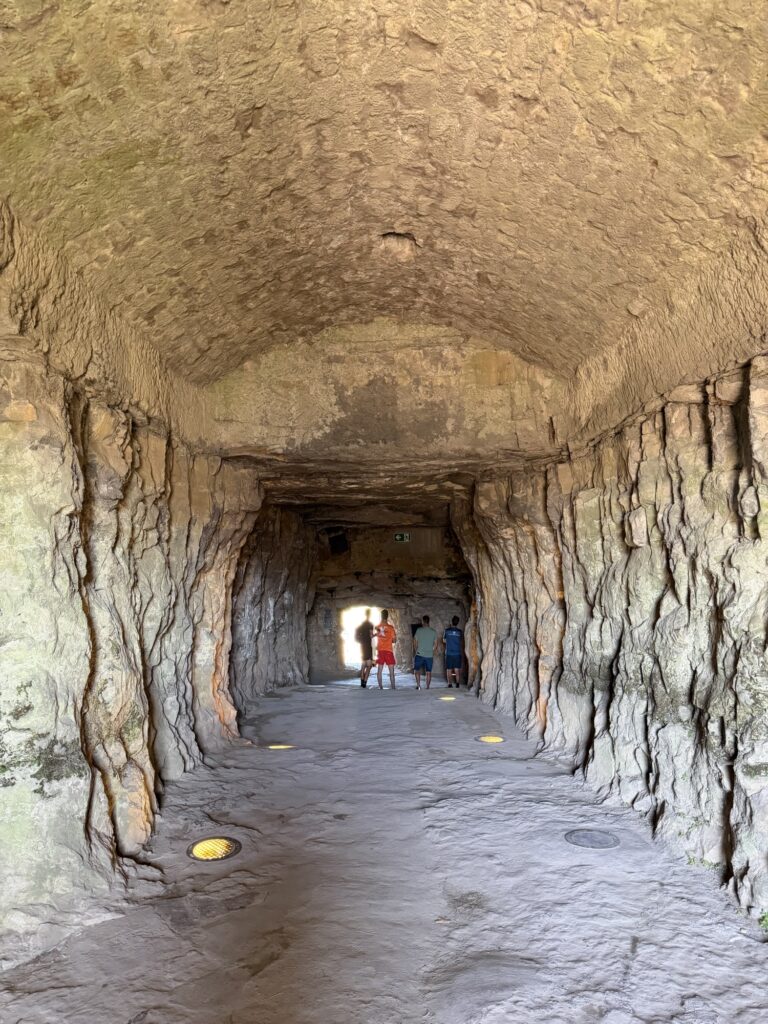
These underground defensive tunnels were carved into the cliffs as part of Luxembourg’s formidable fortress network. At their peak, the city’s fortifications were so extensive that Luxembourg became known as the “Gibraltar of the North.”
The tunnels contain narrow passages, stairways, defensive openings and viewpoints overlooking the lower city.
This attraction may not appeal equally to everyone. Visitors who enjoy military history, engineering and fortified cities will likely appreciate it. Those expecting grand furnished rooms or dramatic underground chambers may find the experience less impressive.
Wear sturdy shoes and be prepared for uneven surfaces, narrow corridors and stairs.
Lunch at Beet
We stopped at Beet, a popular vegan restaurant in central Luxembourg.
The food was flavorful and well prepared, but the meal cost approximately €54 for two people. We were also charged for water, which can surprise travelers accustomed to complimentary tap water in the United States.
The restaurant was good, but Luxembourg is not a cheap dining destination.
Budget-conscious travelers should consider making lunch their main restaurant meal and buying a lighter supermarket dinner.
Walking Through the Grund
After lunch, we descended into the Grund, Luxembourg City’s historic lower quarter.
The neighborhood sits along the Alzette River beneath the upper city’s cliffs and fortifications. Its stone buildings, riverside paths and bridges create a quieter atmosphere than the commercial center above.
The walk is beautiful, but remember that going down means eventually climbing back up. Elevators connect parts of the lower and upper city and can save energy in hot weather.
Luxury Shopping
Back in the upper city, we browsed boutiques including Louis Vuitton, Chanel and Gucci.
Luxembourg’s luxury-shopping district is compact and easy to incorporate into a central walking itinerary. The stores are useful for browsing, but selection may be smaller than in Paris, London or Milan.
Escaping the Heat
The temperature reached approximately 94°F, making the steep streets and exposed viewpoints exhausting.
We returned to the hotel to cool down before going back out in the evening.
During a summer heat wave, build a midday break into the itinerary. Luxembourg City is walkable, but the hills amplify the heat.
MUDAM Luxembourg
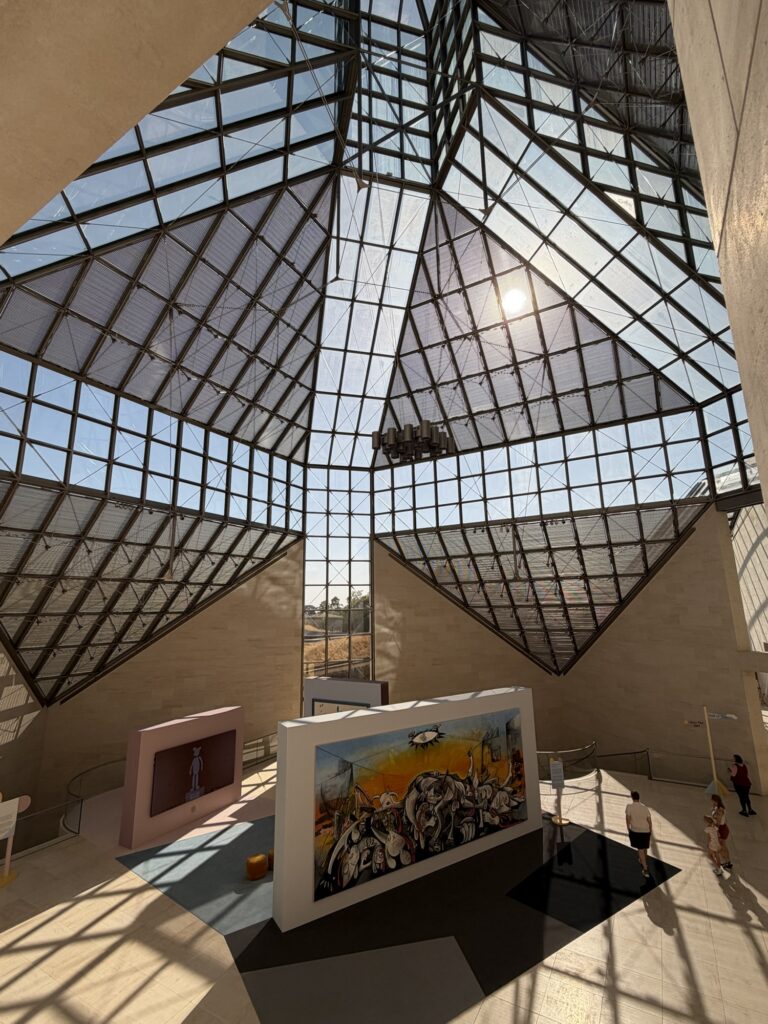
That evening, we visited MUDAM, Luxembourg’s contemporary-art museum.
The building itself is one of the main attractions. Designed by architect I. M. Pei, it combines glass, stone and dramatic geometric spaces beside the remains of historic fortifications.
The exhibitions were provocative and highly conceptual. One installation explored disease, sexuality and the LGBTQ+ community through an abstract presentation that left its message open to interpretation.
Modern art museums are often most rewarding when approached without expecting a straightforward narrative.
We were later told to place our bags in lockers, but the system required a coin we did not have. Rather than continue, we left earlier than planned.
Carry a €1 or €2 coin when visiting European museums, supermarkets and transportation facilities. Lockers and shopping carts frequently require one.
Fort Thüngen
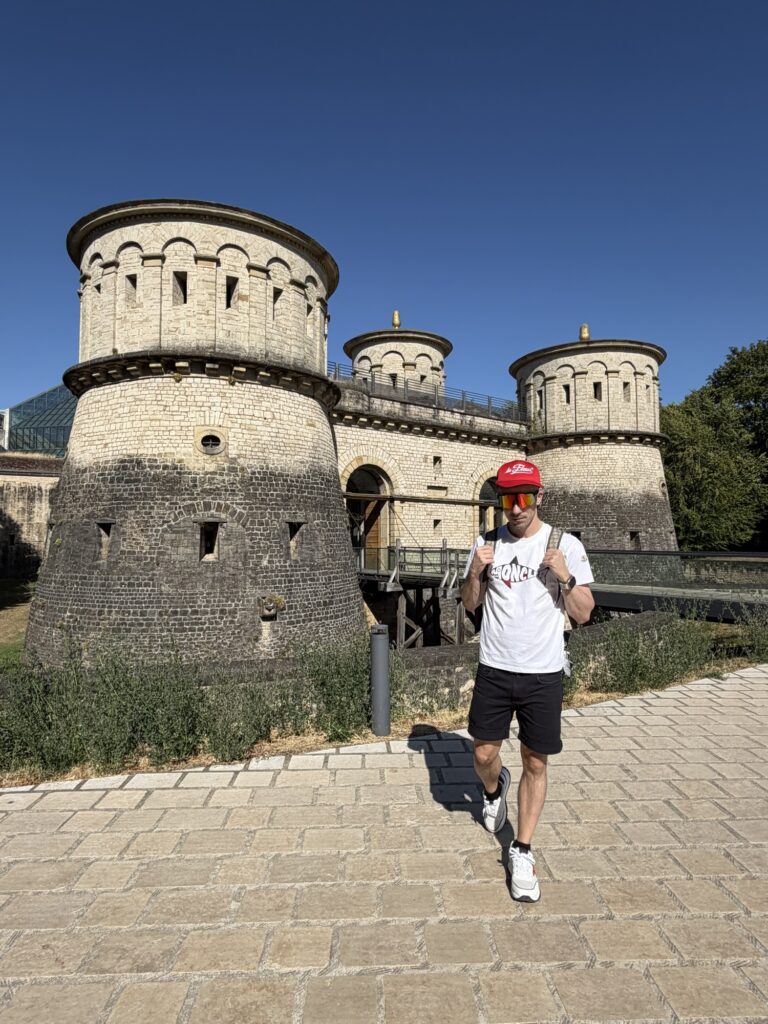
From MUDAM, we walked to Fort Thüngen, recognizable by the three acorn-shaped ornaments atop its towers.
Originally constructed during the 18th century, the fort formed part of Luxembourg’s defensive system. Much of it was dismantled after the 1867 Treaty of London required the city’s fortifications to be reduced.
Today, the restored site offers historical interpretation and broad views over the surrounding districts.
It pairs naturally with MUDAM because the two attractions sit beside one another.
We ended the evening with prepared food from a nearby market and returned to the hotel to pack for Amsterdam.
One-Day Luxembourg Itinerary
A practical walking order is:
Notre-Dame Cathedral
Chemin de la Corniche
Grand Ducal Palace
Place Guillaume II
Bock Casemates
Lunch
The Grund
City-center shopping
MUDAM
Fort Thüngen
Allow a full day, especially when touring the casemates or visiting museums.
What We Would Change in Luxembourg
We would reserve palace tickets earlier only if touring the interior were a priority.
We would carry coins for museum lockers.
We would use the city elevators more often during extreme heat.
We would also budget more carefully for restaurants and rely on supermarkets for at least one meal.
Days 6–9: Amsterdam and WorldPride
Day 6: Luxembourg to Amsterdam
We woke around 7:00 a.m., packed and took Luxembourg’s free train to the airport.
The airport experience was easy, and our flight arrived in Amsterdam on time.
Schiphol Airport, however, has never been our favorite. It is enormous, crowded and often requires long walks between gates, baggage claim and transportation areas.
Rideshare Problems at Schiphol
After collecting our luggage, we requested a Bolt.
Several drivers accepted and then canceled. When a ride finally arrived, the vehicle had no functioning air conditioning, and we were asked to rely on open windows instead.
The driver also left us short of the hotel entrance.
Pickup locations at Schiphol can be confusing, and rideshare drivers may struggle with restrictions around terminals and designated zones.
A train into Amsterdam Centraal is often faster, cheaper and more predictable than a car. Travelers with heavy luggage may still prefer a taxi, but should confirm the exact pickup point before leaving the terminal.
Inntel Hotels Amsterdam Centre
We stayed at Inntel Hotels Amsterdam Centre.
The central location was excellent, but the property felt more worn than our hotels in Slovenia and Luxembourg. It was manageable for a short stay, particularly because we planned to spend very little time in the room.
For Amsterdam, location often matters more than luxury. Staying near Centraal Station or within the canal belt reduces transportation time and makes late-night returns easier.
Lunch at SLA
After settling in and taking care of a few errands, we ate at SLA, a certified-organic restaurant specializing in salads, bowls and plant-forward meals.
We ordered a vegan gyro plate, a Protein Power Bowl, a green smoothie and a berry smoothie.
The meals were fresh, filling and flavorful. The smoothies were pleasant, although the bowls were the stronger part of the meal.
SLA is a strong choice for travelers looking for vegetables, protein and whole foods after several days of airport meals.
Designer Shopping in Amsterdam
We spent part of the afternoon browsing Louis Vuitton, Prada, Burberry and Gucci.
Amsterdam is not Europe’s largest luxury-shopping destination, but the P.C. Hooftstraat area contains most of the major designer brands within a compact district.
Before returning to the hotel, we bought groceries and snacks for the coming festival days.
This became one of our best decisions. WorldPride schedules stretched late into the night, and having simple food available prevented us from relying entirely on delivery services or late-night fast food.
Day 7: Vegan Dining and the WorldPride Music Festival
We began the day slowly, knowing the night would run late.
After breakfast, we stopped at Juice Monkey for vegan protein shakes and handled a few practical errands before returning to the hotel to prepare.
Birthday Dinner at Hearth
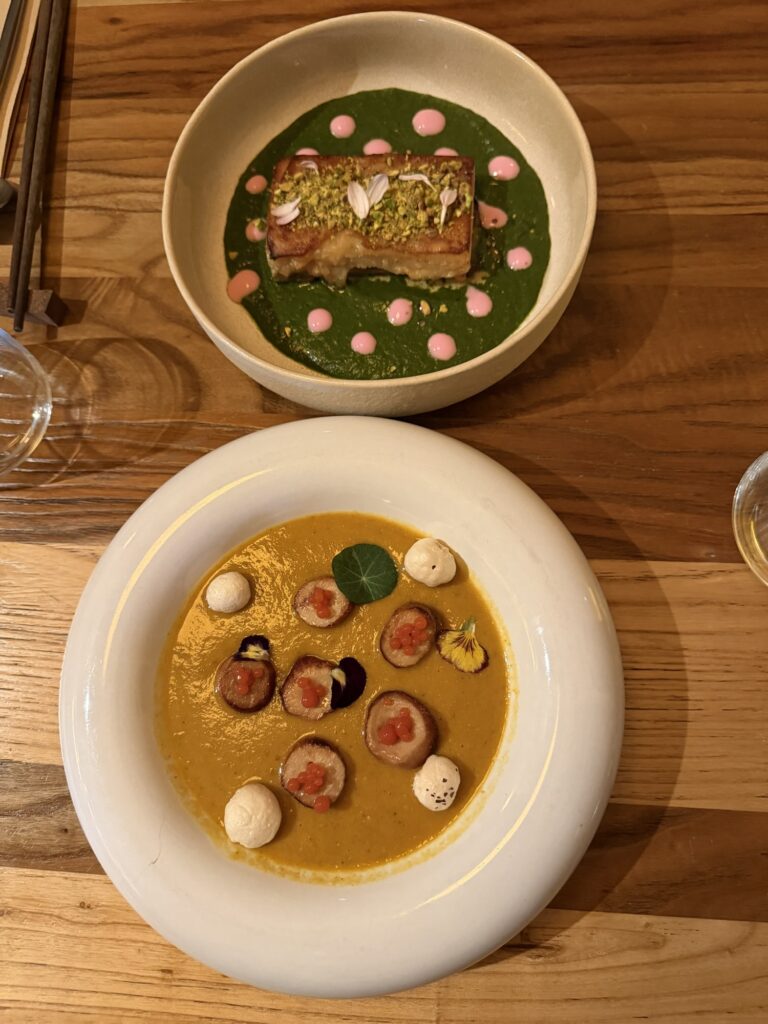
Dinner was at Hearth, one of Amsterdam’s more creative plant-based restaurants.
We ordered a king oyster mushroom dish designed to evoke fish and an entrée centered on celeriac, a root vegetable with a mild, earthy flavor.
Both dishes were imaginative, beautifully presented and full of flavor.
The weakness was portion size.
This was refined vegan dining rather than a large, casual meal, and we left wanting considerably more food. Travelers with larger appetites should order additional courses or plan a snack afterward.
WorldPride Music Festival
That evening, WorldPride shifted the trip into an entirely different gear.
The festival drew visitors from around the world and created the kind of atmosphere that makes large Pride celebrations feel simultaneously international and deeply communal.
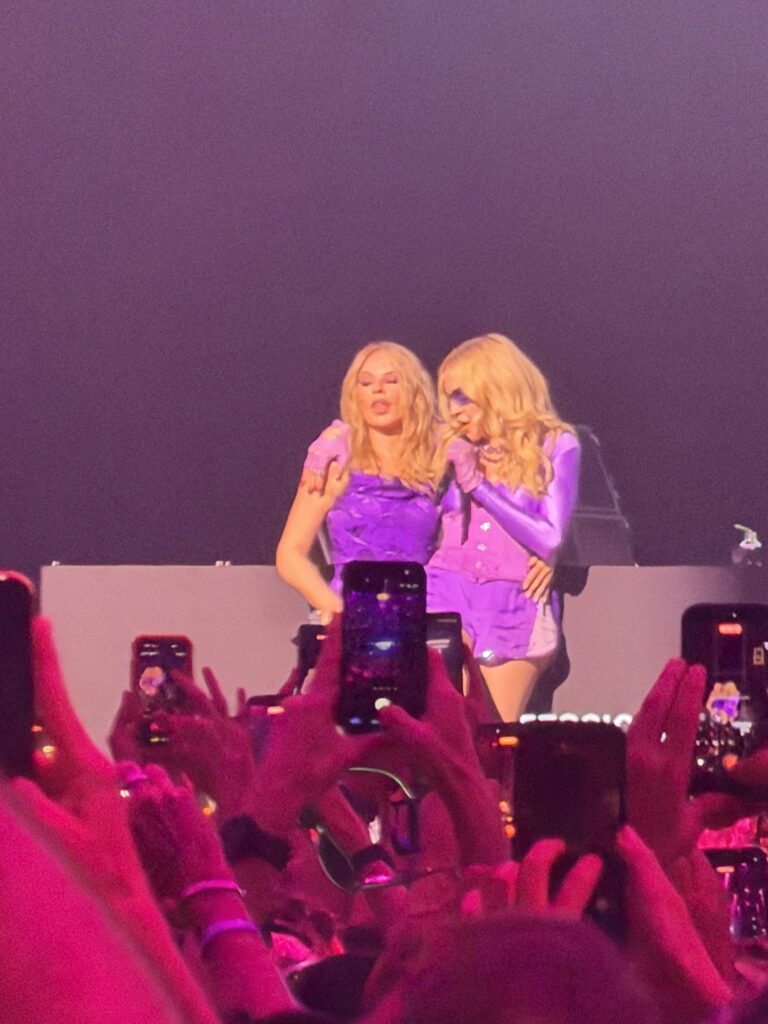
Purple Disco Machine delivered one of the night’s most energetic sets, combining disco, funk and house music in a way that kept the crowd moving.
Paris Hilton later appeared for a DJ set that leaned heavily into spectacle, recognizable tracks and crowd participation.
The night was as social as it was musical. Pride festivals often create unusually easy opportunities to reconnect with old friends and meet people from entirely different cities and countries.
We danced until approximately 4:00 a.m.
WorldPride Festival Tips
Buy tickets early. Major Pride events can sell out well in advance.
Confirm whether the event uses lockers, cashless payment or mobile-only tickets.
Eat a substantial meal before entering; festival food may be limited or expensive.
Agree on a meeting point in case phone service becomes congested.
Bring a portable battery.
Wear shoes that can survive hours of standing and dancing.
Check the last public-transportation times, even when you expect to use a taxi afterward.
Day 8: Amsterdam Canal Parade, Madonna and Rapido
The next morning began with very little sleep.
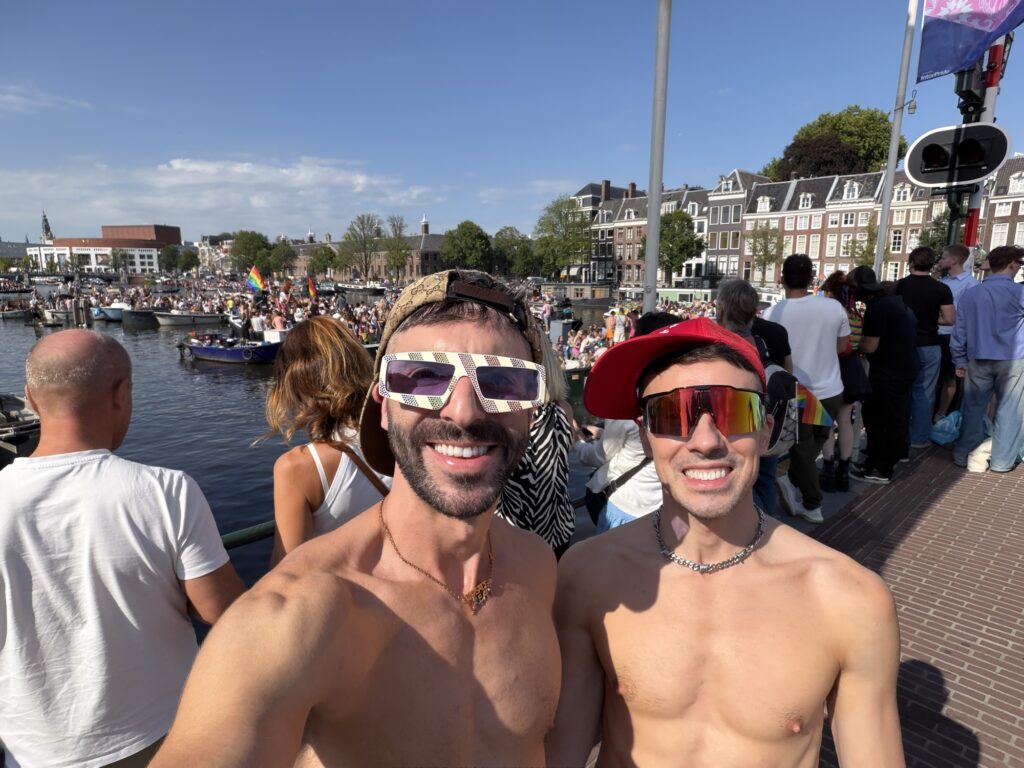
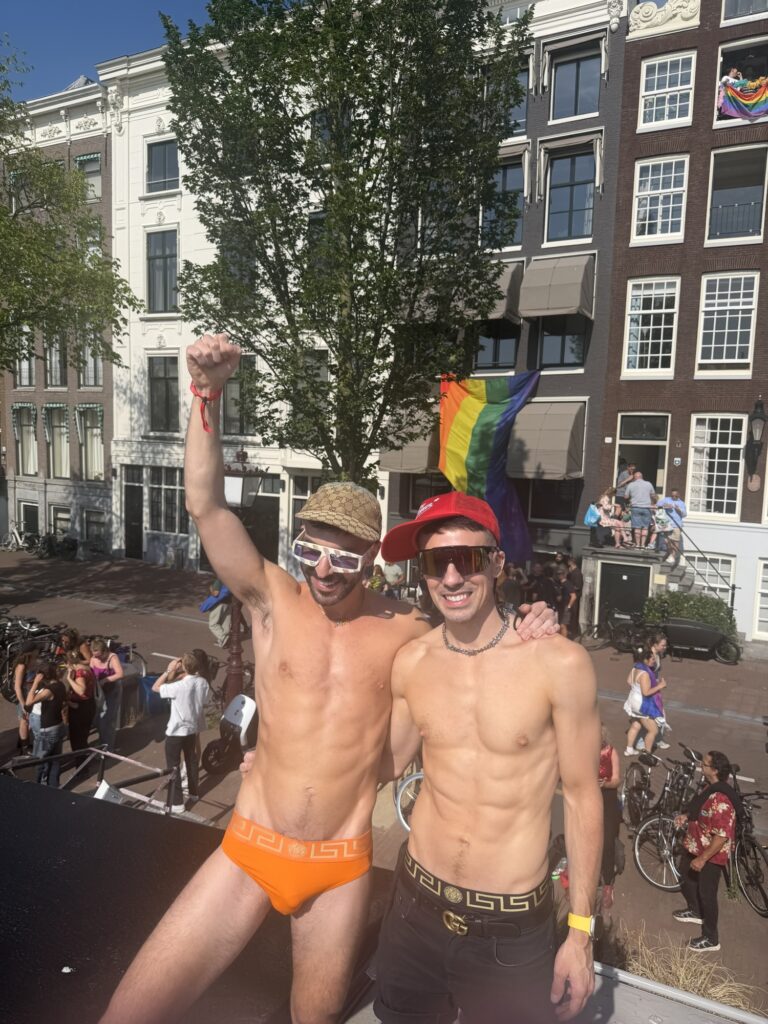
We met friends on a boat to watch Amsterdam’s Canal Parade, one of the world’s most distinctive Pride events.
Amsterdam Canal Parade
Unlike a conventional street parade, Amsterdam’s celebration unfolds on the water.
Decorated boats travel through the historic canals while crowds gather along bridges, quays and waterfront buildings. Music, costumes, flags and performances transform the city center into one enormous celebration.
Watching from a private boat provided a comfortable and social experience, but excellent views are also available from public areas along the route.
Arrive early when watching from land. The best canal-side spaces fill hours before the parade reaches them.
Bring water, sunscreen and food. Access to shops and restrooms becomes difficult once crowds build.
Takeout From EAZIE
After the parade, we walked more than a mile back toward our hotel and ordered takeout from EAZIE.
We chose a low-carbohydrate noodle bowl with tofu and a teriyaki tofu bowl.
The meal was quick, filling and practical—exactly what we needed between two major Pride events.
Madonna at WorldPride
Later that night, we arrived at the WorldPride venue shortly before midnight.
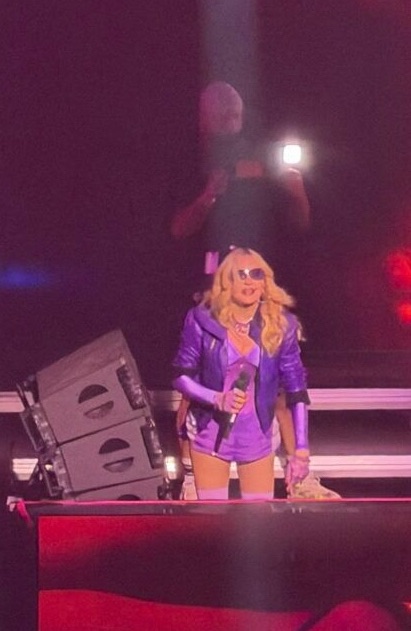
After a long wait, Madonna appeared.
Her performance included music associated with a new continuation of the ‘Confessions’ era as well as “Sorry” from ‘Confessions on a Dance Floor’.
The surprise escalated when she brought out Kylie Minogue.
Seeing two artists with such enormous importance to LGBTQ+ pop culture share the stage created the kind of moment that immediately becomes part of Pride history. The crowd reaction was explosive.
It was the defining performance of our trip.
Rapido After-Party
After the concert, we continued to Rapido, one of Amsterdam’s best-known large-scale gay dance parties.
The music and crowd were strong, but the venue was extremely hot. With limited airflow and a packed dance floor, the room felt closer to a sauna than a nightclub.
We stayed until roughly 4:30 a.m. before calling it a night.
Amsterdam Pride Nightlife Tips
Do not schedule major daytime sightseeing after consecutive late-night events.
Hydrate before entering crowded venues; water access may involve long lines.
Carry earplugs designed for concerts.
Identify exits and quieter areas soon after arriving.
Use a secure crossbody bag or phone tether in dense crowds.
Never assume an event will have effective climate control.
Day 9: The Recovery Day We Should Have Planned
After several days of walking, travel, heat, concerts and late nights, the accumulated exhaustion finally caught up with us.
Most of the day was spent at the hotel resting, watching television, hydrating and doing very little.
We had originally planned to go back into Amsterdam, but abandoning that plan was the correct decision.
Travel culture often rewards travelers for doing more: more landmarks, more restaurants, more neighborhoods and more nightlife. In reality, the ability to recognize when your body needs rest can protect the rest of the trip.
A recovery day should not automatically be considered a wasted day.
For festival-heavy itineraries, it may be smarter to schedule one intentionally rather than waiting until exhaustion forces it.
Recovery-Day Tips
Keep water, electrolyte drinks and simple food in the hotel room.
Avoid booking nonrefundable morning tours after major nightlife events.
Choose a hotel with good climate control and comfortable bedding.
Consider a late checkout for the day after the final event.
Build at least one low-demand period into any trip involving nightlife.
Day 10: Amsterdam to New Jersey via London
Our final day began around 10:00 a.m.
We packed and reached Schiphol approximately three and a half hours before boarding. After the unpredictability of the week, arriving early felt worthwhile.
We bought smoothies, rested and waited for the flight to London Heathrow.
The departure was slightly delayed, which immediately raised concerns about our connection.
British Airways staff indicated that the itinerary remained possible, but our available transfer time shrank to approximately 50 minutes.
The Heathrow Connection
After landing at Heathrow, we had to deplane, follow the flight-connection route, pass through transit security and take an airport train toward the departure gate.
At security, both of our bags were pulled aside because water remained inside reusable bottles.
The agents were kind and processed the bags quickly, but even a small delay felt significant with the gate closing.
One of us ran ahead while the other was still waiting to board the airport train.
The messages from the gate were not reassuring.
Boarding was close to ending, and several passengers from the delayed Amsterdam flight were still moving through the airport.
After a frantic run through Heathrow, we reached the gate.
Fortunately, the airline was still waiting for connecting passengers, and we boarded the flight home.
Heathrow Connection Tips
A 50-minute transfer at Heathrow can be technically possible but is not comfortable.
Book flights on one ticket whenever possible. Airlines have more responsibility to assist when a protected connection is missed.
Check whether you must change terminals.
Follow purple flight-connection signs rather than entering the United Kingdom arrivals route.
Empty all water bottles before security, even when the bottle itself is permitted.
Keep electronics and liquids easy to remove.
Do not stop for food until you have confirmed the gate and walking time.
When choosing between similar itineraries, pay more for the longer Heathrow layover.
What This Trip Cost Us in Energy—and What It Gave Back
This itinerary combined three very different versions of Europe.
Slovenia was the revelation: green, peaceful, easy to navigate and filled with scenery that looked almost artificially perfect.
Luxembourg was compact, elegant and historically richer than its small size might suggest.
Amsterdam provided the finale: healthy vegan food, canal-side celebrations, fashion, nightlife and an unforgettable gathering of pop icons during WorldPride.
The trip also reinforced several broader lessons.
Do not overestimate what can fit into a late-start day.
Reserve timed natural attractions in advance.
Carry cash and a few euro coins.
Use supermarkets strategically.
Add margin to airport transfers.
Most importantly, leave room to recover.
The best journeys are not the ones where everything goes according to plan. They are the ones where wrong trains, closed kitchens, overheated parties and near-missed flights become part of the story.
And this trip gave us plenty of stories.
Essential Planning Guide
Best Time to Take This Trip
Late spring through early autumn offers the best access to Slovenia’s lakes, outdoor attractions and hiking areas.
Summer provides warmer swimming conditions and the greatest number of events, but also brings larger crowds, higher prices and increasing heat.
Travelers interested in Amsterdam Pride or WorldPride should book flights and hotels many months ahead.
How Many Days Do You Need?
For a more relaxed version of this itinerary, we recommend:
Slovenia: Five to seven days
Luxembourg: One or two days
Amsterdam: Three to five days
Our schedule was possible, but Slovenia deserved additional time.
Should You Rent a Car?
A car is highly useful for Predjama Castle, Lake Bled, Lake Bohinj and more remote Slovenian parks.
You do not need one in Ljubljana, Luxembourg City or Amsterdam.
Reserve the smallest practical vehicle. Narrow roads, compact parking spaces and historic city garages make oversized cars inconvenient.
Vegan Travel
All three destinations were manageable for vegan travelers.
Ljubljana offered several dedicated plant-based restaurants and strong supermarket options.
Luxembourg had good vegan food, although restaurant prices were higher.
Amsterdam was by far the easiest destination, with everything from health-focused bowls to creative fine dining and quick Asian takeout.
Always save restaurants on a map before traveling and verify when the kitchen closes—not merely when the restaurant closes.
Final Verdict
Slovenia: The destination we most want to revisit
Luxembourg: Excellent for a one-day or weekend stop
Amsterdam: Best for culture, food, nightlife and major events
Biggest mistake: Arriving at Vintgar Gorge without a reservation
Best natural attraction: Lake Bohinj
Best historic attraction: Predjama Castle
Best city view: Chemin de la Corniche
Best casual vegan meal: SLA
Most unforgettable moment: Madonna and Kylie Minogue together at WorldPride
Most stressful moment: Running through Heathrow to make the flight home
Three countries, 10 days and one very close airport connection later, we returned home exhausted—but already thinking about where to go next.
